


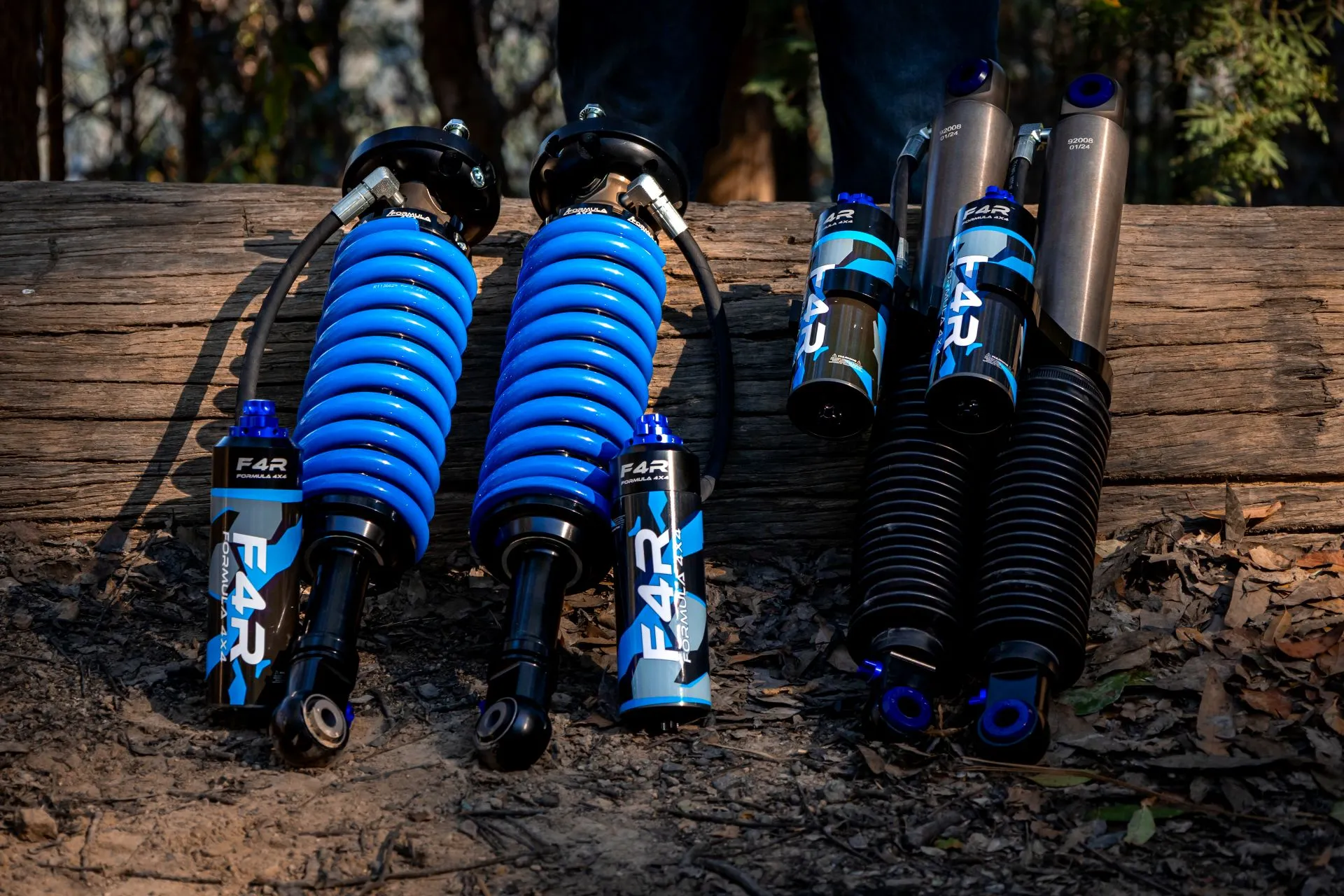

Remote reservoir shocks are shock absorbers with a separate oil and gas reservoir connected by a high pressure hose. The extra oil volume and cooling keep damping consistent when a 4x4 works hard on corrugations, sand or heavy touring loads, which is exactly where standard shocks overheat and fade.
Remote reservoir shocks have become the go to upgrade for serious touring 4x4s, and once you understand what's happening inside a shock on a long stretch of corrugations, it's easy to see why. Below we explain how they work, how they compare with standard shocks, how to adjust them and who gets the most from them. If you already know you want one, see our adjustable remote reservoir lift kits for your vehicle.
How Do Remote Reservoir Shocks Work?
Every shock absorber controls spring movement by forcing oil through small passages in a piston. That resistance turns the energy of a bump into heat. On a sealed road the heat has time to escape, but on corrugations the shock cycles thousands of times in a few minutes and the temperature climbs fast.
A remote reservoir shock adds a second chamber, mounted away from the shock body and joined by a hose. The reservoir holds extra oil, and inside it a floating piston keeps the oil separate from a charge of nitrogen gas. That separation stops the oil and gas mixing and foaming, a problem called aeration that makes damping feel soft and unpredictable.
The design delivers three gains together: a larger oil volume to absorb heat, more surface area to shed it and stable pressure that keeps the oil from frothing when it gets hot.
The result is a shock that keeps doing the same job at the end of a long day as it did at the start.
What Do Remote Reservoir Shocks Do Better Than Standard Shocks?
The main difference shows up as shock fade. As a standard shock heats up, the oil thins and damping drops away, so the vehicle starts to wallow, bounce and lose traction over rough ground. Drivers often notice it as the ute feeling floaty after an hour on a dirt road, even though it felt fine when they set off.
A reservoir design holds its damping far longer, which brings real benefits on and off road:
• Consistent control on corrugations: The wheels stay planted, so steering and braking feel the same from start to finish.
• Better traction off road: Stable damping keeps tyres in contact with rocks, ruts and sand.
• More comfort under load: Touring gear, water and a full fuel tank are handled without the rear bottoming out or bouncing.
• Longer shock life: Lower operating temperatures are easier on seals and oil.
Put remote reservoir shocks vs normal shocks side by side on a short weekend drive and the gap looks small. Over days of outback touring, it becomes the difference between arriving tired and arriving comfortable.
How Adjustable Are Our F4R Remote Reservoir Shocks?
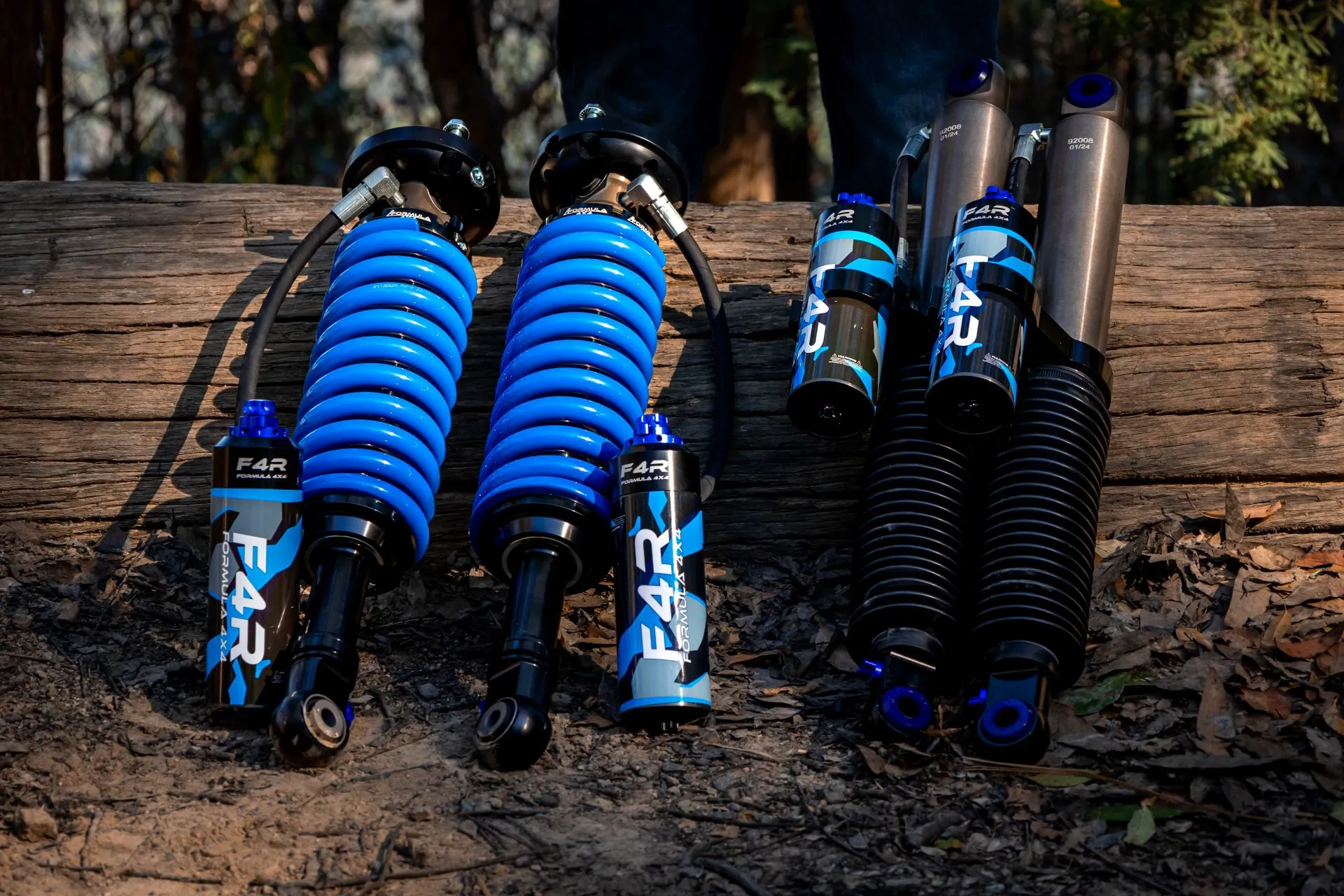
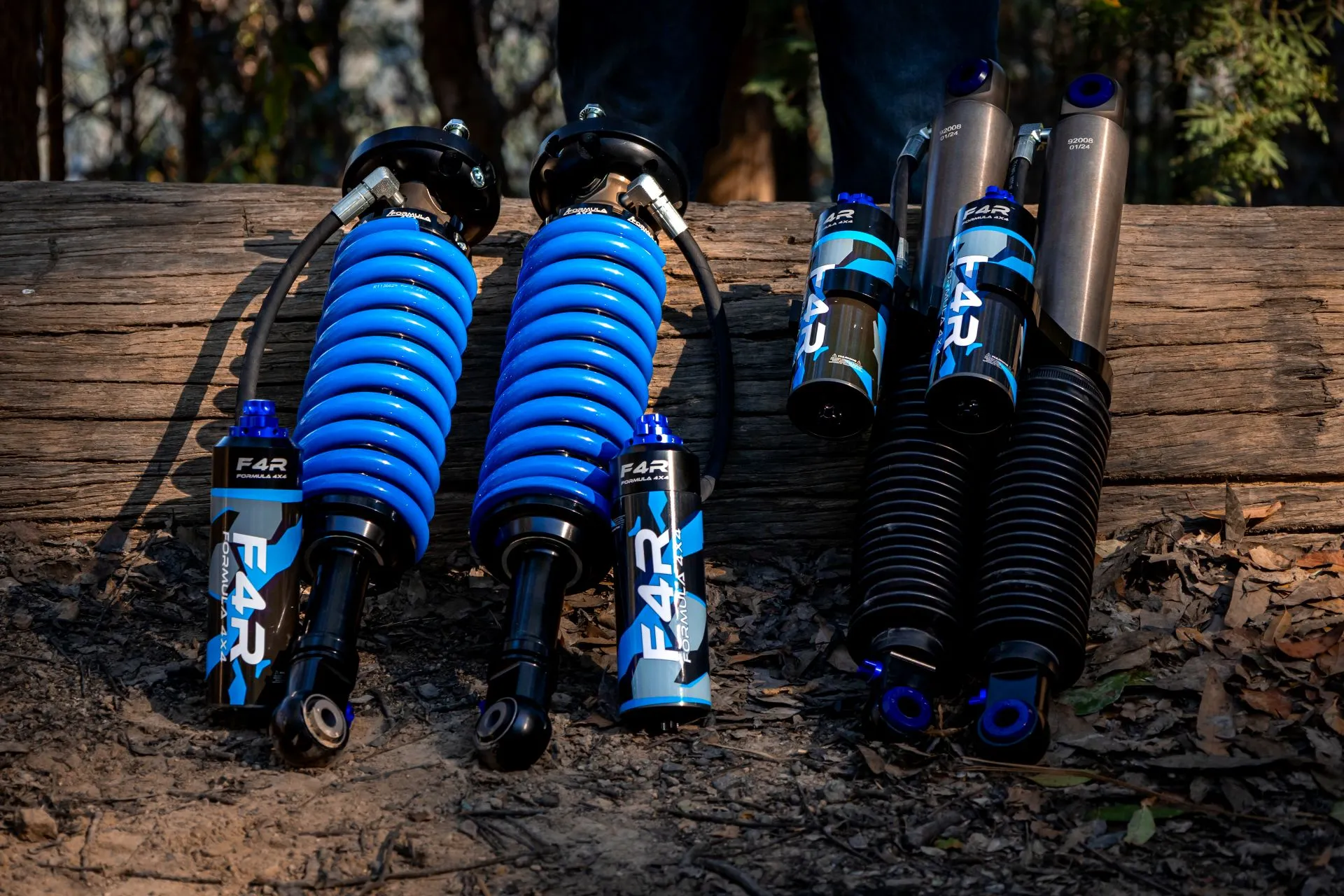
Our F4R Formula 4x4 Remote Reservoir shocks were designed and developed in Australia for local conditions, then valved to balance comfort with control on and off road. When you compare the best remote reservoir shocks on the aftermarket, adjustability and heat control are the two things that separate them, and both sit at the centre of the F4R design.
As fully adjustable shock absorbers, they give you control at both ends. At the front, the F4R coilover uses a preload adjustable spring seat to set ride height, along with adjustable compression and rebound damping. At the rear, the shock offers adjustable compression and rebound. Across the range there are up to 8 low speed compression settings, 6 high speed compression settings and 12 rebound settings.
Each adjustment targets a different kind of movement:
• Low speed compression: Controls slower movements like cornering, braking and vehicle sway.
• High speed compression: Manages sharp hits from potholes, washouts and corrugations.
• Rebound: Sets how quickly the shock extends after compressing, which controls float and bounce.
Every F4R kit is backed by our 5 year / unlimited km warranty.
How to Adjust Remote Reservoir Shocks
Start from the baseline settings supplied with your kit, then change one adjuster at a time by a click or two so you can feel what each change does. If the ride is harsh over sharp hits, ease off high speed compression. If the vehicle leans and sways through corners, add low speed compression. If it floats or bounces after a dip, add rebound, and if it feels choppy over small bumps, back rebound off. Test on the same stretch of road after each change, and note your settings for loaded and unloaded driving so you can switch quickly between them. Our full guide on how to set up adjustable shocks gives starting points for corrugations, sand and towing.
Are Remote Reservoir Shocks Worth It for Your 4x4?
Weighing up the pros and cons comes down to how and where you drive, and for the right driver they're one of the best value upgrades you can make. They're worth it if you:
• Tour on corrugated outback roads: Long gravel runs are where heat builds fastest, as covered in the best suspension for corrugated roads.
• Carry heavy touring loads or tow: Extra weight makes the shocks work harder on every bump.
• Drive sand, beach or rough tracks often: Sustained suspension movement on soft or broken ground generates constant heat.
• Want to tune your ride: Adjustable damping lets one setup suit both the daily drive and the trip.
If your 4x4 spends most of its life on bitumen with occasional weekend tracks, a fixed height kit with our Big Bore shocks is a strong, more affordable choice. Our post on why your 4x4 needs better shocks covers that option, and you can compare prices in how much a 4x4 lift kit costs to install.
Remote Reservoir Shocks vs Standard Shocks Compared
|
Feature |
Standard shocks |
Remote reservoir shocks |
|
Oil capacity |
Limited to the shock body |
Extra oil held in a separate reservoir |
|
Heat management |
Heats quickly under sustained use |
Larger oil volume and cooling surface |
|
Shock fade on corrugations |
Common on long runs |
Strongly resisted |
|
Oil and gas separation |
Varies by design |
Floating piston prevents aeration |
|
Damping adjustment |
Usually none |
Compression and rebound adjustment on F4R |
|
Best suited to |
Light use and daily driving |
Touring, towing, heavy loads, sand and corrugations |
FAQs
Looking for more information about remote reservoir shocks? Below we answer the most commonly asked questions
What are remote reservoir shocks?
Do remote reservoir shocks ride better?
Where does the remote reservoir mount?
Can I fit remote reservoir shocks without lifting my 4x4?
Do remote reservoir shocks need more maintenance?
How much do remote reservoir lift kits cost?
Do remote reservoir shocks increase how much I can carry?
Are remote reservoir shocks height adjustable too?
For suspension that keeps its cool on every trip, find the adjustable remote reservoir lift kits to suit your 4x4, or compare every option across our 4x4 lift kits range.