


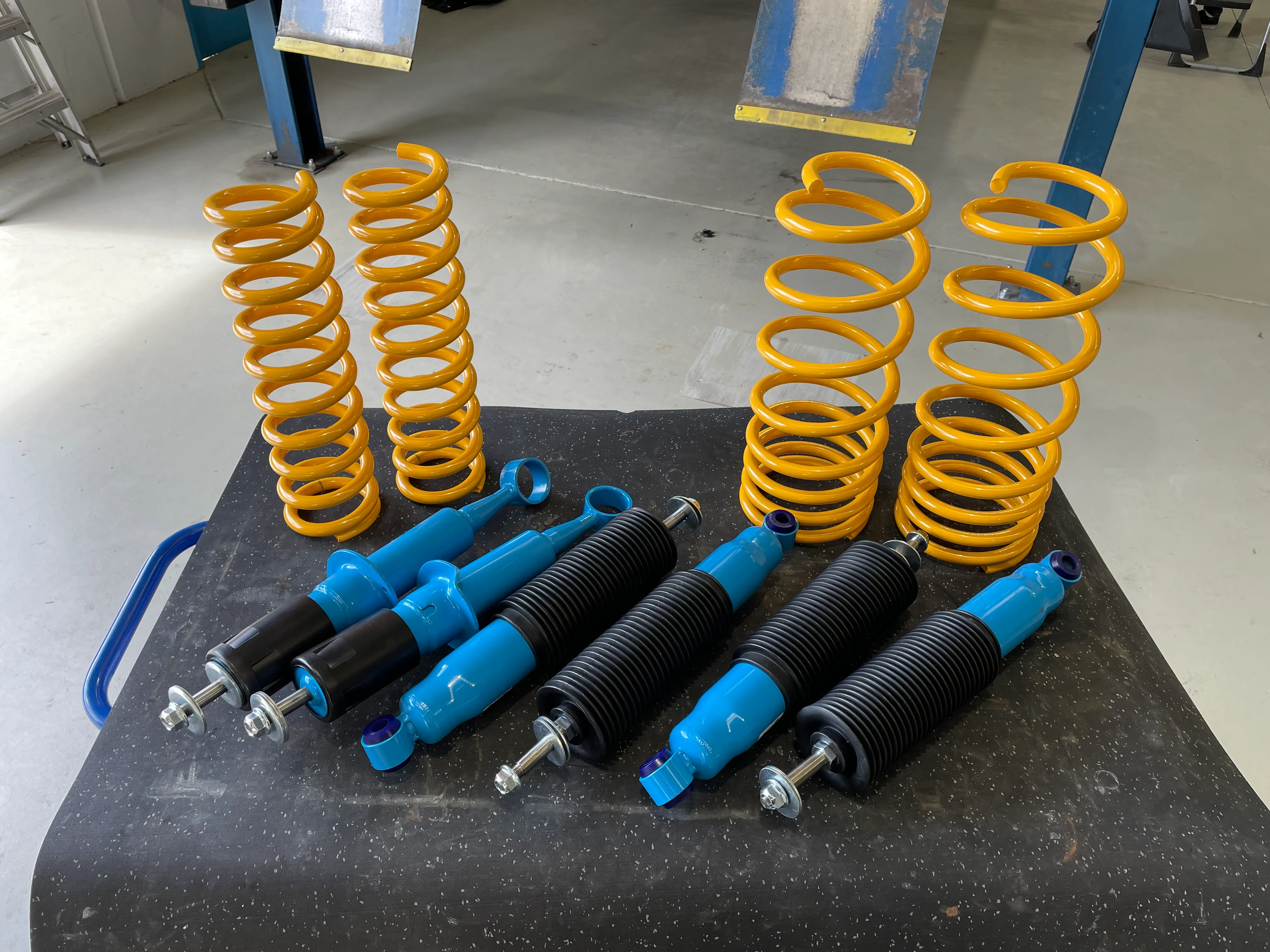

A 4x4 with a steel bull bar and winch needs front coil springs rated for the extra weight over the front axle, not just more height. Heavy duty coil springs matched to your accessory load hold ride height, stop the nose sagging and keep the suspension in its working range. Height adjustable struts then let you fine tune the stance.
A steel bull bar and winch are among the most common 4x4 upgrades, and among the heaviest. Add driving lights, a light bar and recovery points, and the front end can carry a lot more than the factory springs were designed for. Below we explain how accessory weight affects your front suspension and how to choose springs that carry it properly. For struts that let you set the height to suit, browse our height adjustable lift kits.
How Does a Bull Bar and Winch Affect Front Suspension?
Factory front springs are rated for the vehicle as it left the showroom, with a small margin for normal use. A steel bull bar, winch and lights add weight right at the front of the vehicle, ahead of the axle, which loads the front springs even more than the same weight placed in the cabin.
The springs compress under that extra load, so the nose drops. With less room left to compress, the suspension can bottom out over bumps, headlights aim lower, steering can feel heavier and clearance at the front shrinks just where you need it on steep entries.
That's why accessory weight should be the starting point when choosing front springs.
Why Not Just Add Height With Spacers?
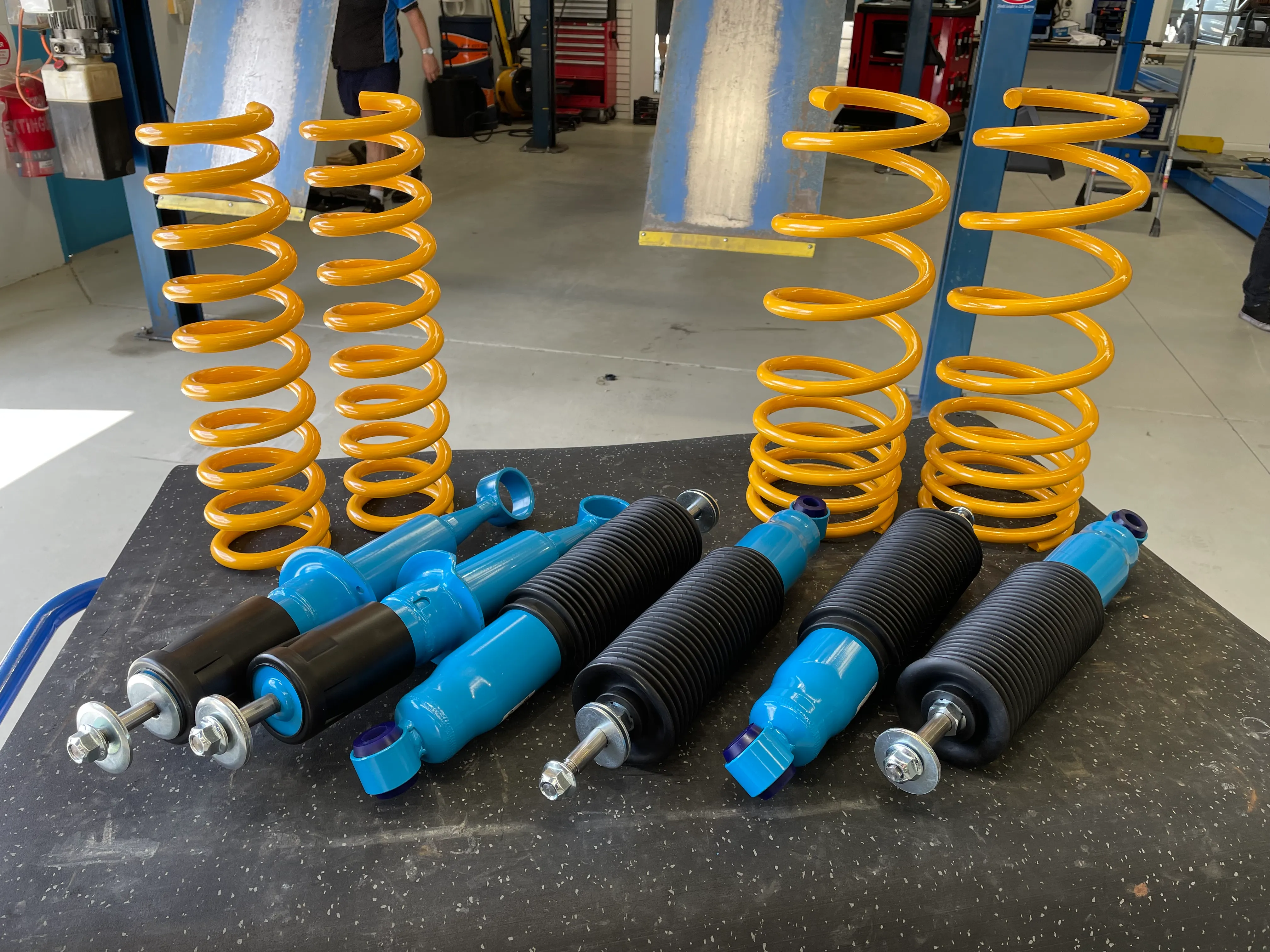
Strut spacers or preload can raise the nose back to level, but they don't change what's holding it up. The factory spring is still carrying more weight than it was designed for, so it sits further into its travel and keeps working near its limit.
The result is a vehicle that looks level parked but can still wallow and bottom out once it's moving. We compare the two approaches in strut spacers vs adjustable struts.
A spring rated for your accessory load fixes the cause rather than hiding the symptom.
How Do You Choose the Right Coil Springs for Accessories?
Start by listing what's fitted, or planned, at the front of the vehicle. Manufacturers publish weights for bull bars, winches and lights, so add them up to get a realistic front accessory load. Then tell your fitting dealer exactly what's on the vehicle and how it's used.
Key things to get right:
• Spring rating: Heavy duty coil springs suited to the front end weight, including accessories.
• Matched shocks: Damping that suits the spring rate, or the ride will feel bouncy or harsh.
• Correct height: Enough lift to restore clearance, within your state's legal limits.
• Room to adjust: Height adjustable struts so the stance can be corrected as accessories change.
Our ReadyStruts are matched to each vehicle's front end weight and can be set within the kit's range, which makes them well suited to vehicles carrying front accessories.
What About Weight Limits and GVM?
A bull bar and winch don't just load the springs, they also count toward your vehicle's front axle rating and Gross Vehicle Mass. Every kilogram added permanently comes off your available payload for passengers, fuel and gear.
If your vehicle is heavily accessorised and also carries touring gear or tows, it's worth checking where it sits against the limits. Our guide on how to calculate your 4x4's payload walks through it, and a certified GVM upgrade may be the right step if you're close to the limit.
Springs control how the vehicle carries weight, while only certification changes how much it can legally carry.
Front Suspension Options for Accessory Weight
|
Option |
Restores height |
Supports extra weight |
Adjustable later |
|
Strut spacers |
Yes |
No |
Swap spacers |
|
Preload on factory strut |
Not possible |
No |
No |
|
Heavy duty fixed height struts |
Yes |
Yes |
No |
|
Height adjustable ReadyStruts |
Yes |
Yes |
Yes, within the kit's range |
FAQs
Looking for more information about coil springs for a bull bar and winch? Below we answer the most commonly asked questions
Do I need new springs after fitting a bull bar?
How much does a bull bar and winch weigh?
Can I fix front sag by adjusting preload?
Will heavy duty coil springs make the ride harsh?
Should I fit springs before or after the bull bar?
Does a bull bar affect my GVM?
To carry your front accessories properly and level the stance, choose from our height adjustable lift kits.