


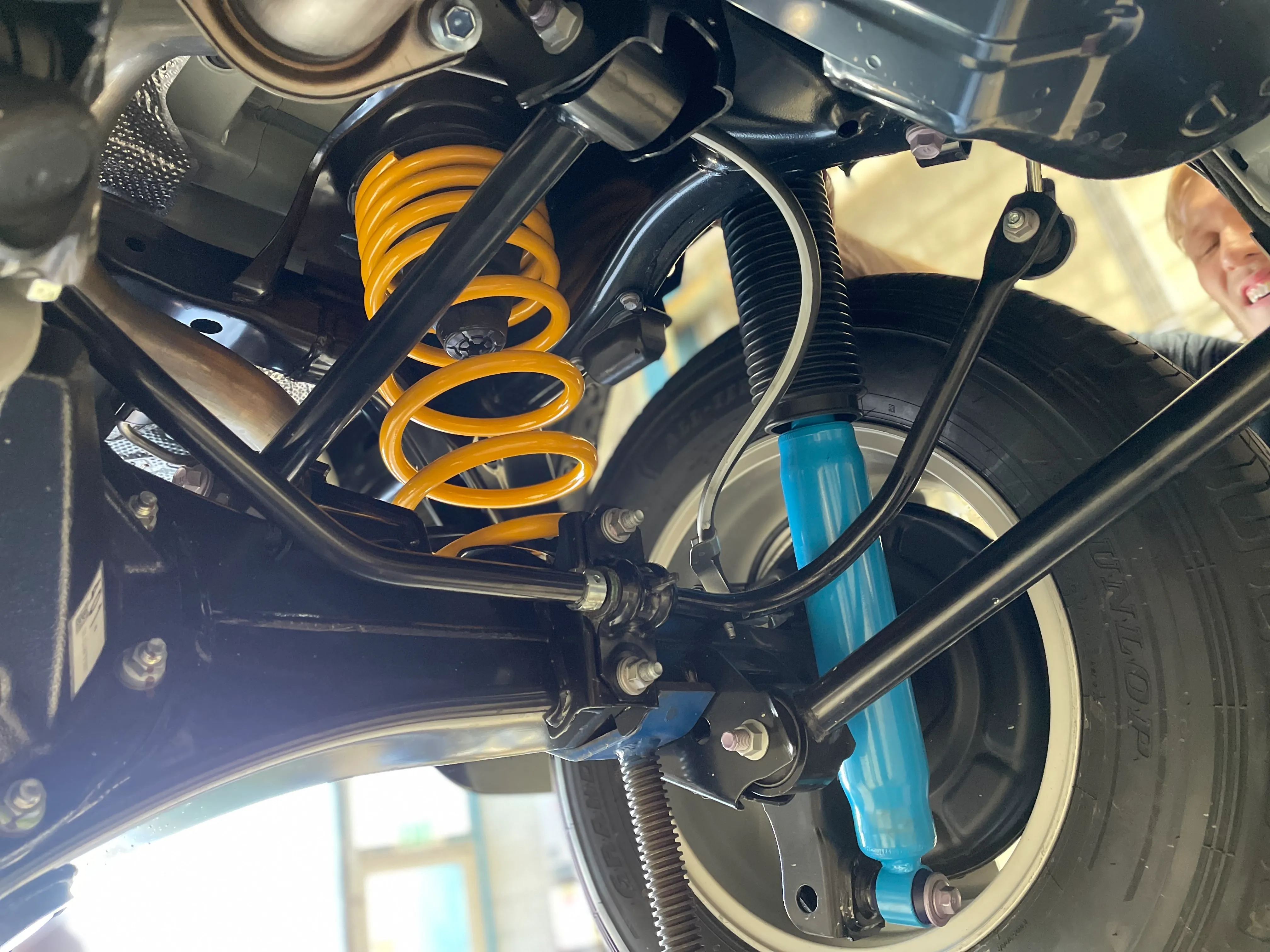

In Queensland, a 3 inch (75mm) lift is legal without certification when it combines no more than 50mm of suspension lift with up to 25mm of extra height from larger tyres. A 75mm lift from suspension alone needs certification. NSW and Victoria follow the same 50mm plus 25mm approach, while other states set their own limits.
Lift laws are one of the most common questions we get from 4x4 owners, and for good reason. Getting the height wrong can mean a defect notice, a voided insurance claim or a vehicle that handles poorly. Here's how the rules work, what "legal" means in practice and how to plan a lift that stays on the right side of them. For kits engineered around these limits, explore our range of 4x4 lift kits.
How Do Australian Lift Laws Work?
Vehicle modifications in Australia are governed by the National Code of Practice for Light Vehicle Construction and Modification, known as VSB14. Each state and territory then applies its own version of those rules through its transport authority. The national code allows a basic 50mm increase in ride height without certification, and several states have extended that allowance.
Two kinds of lift count toward your total. Suspension lift comes from taller springs, longer shocks and struts or lift components. Tyre lift comes from fitting a larger diameter tyre, and because only half of any diameter increase raises the vehicle, a tyre 50mm larger in diameter adds about 25mm of height.
Body lifts, where blocks raise the body off the chassis, are treated separately again and generally need certification.
The key point is that lift limits apply to the total height gained, so your suspension and tyre choices need to be planned together.
What Is the Legal Lift Kit Height in QLD?
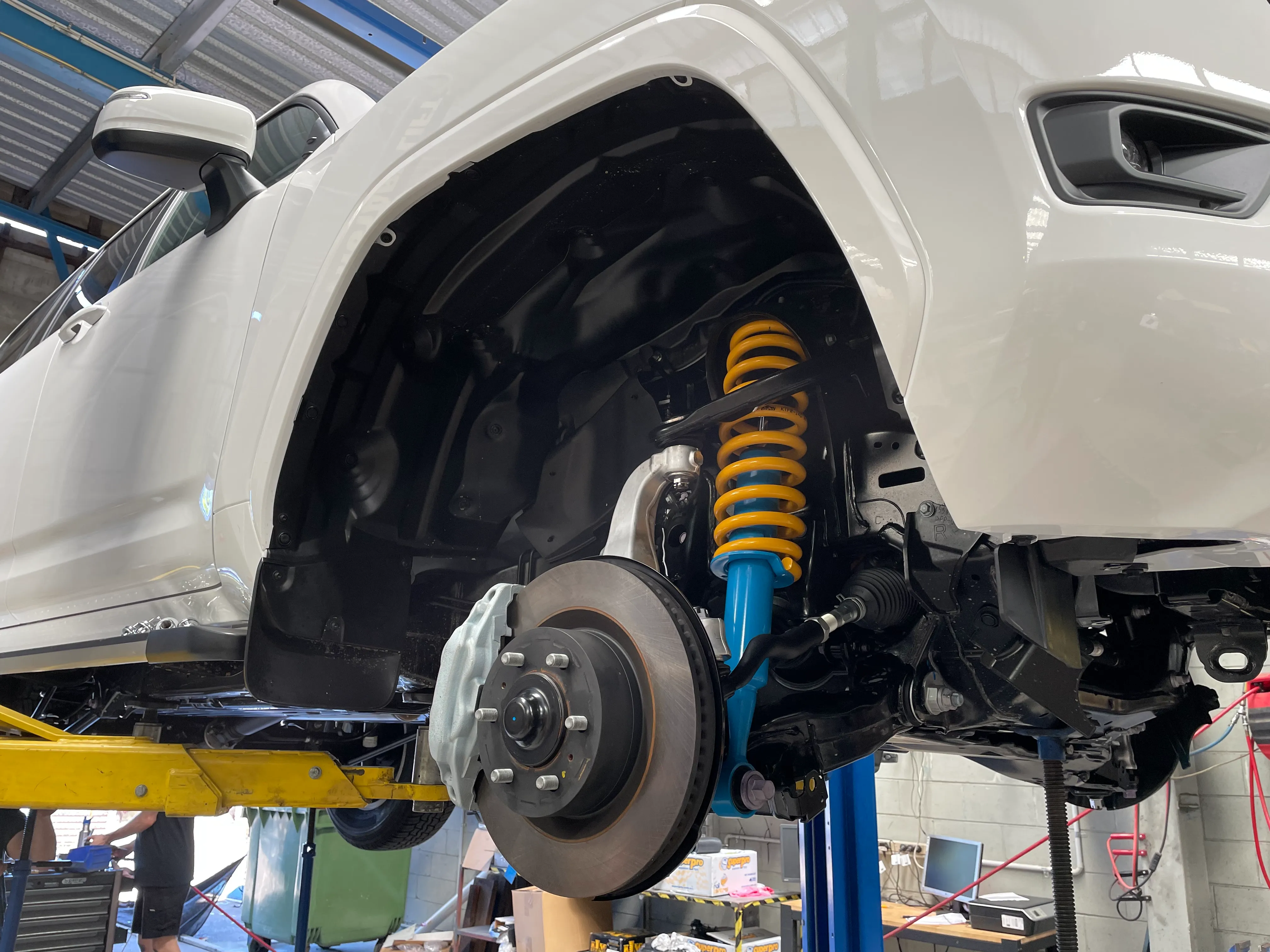
Queensland's rules sit in the Queensland Code of Practice for vehicle modifications. Since 2018, both ESC and non ESC vehicles can be raised up to 75mm without certification, made up of a maximum 50mm suspension lift and a maximum 25mm from larger tyres.
Above that, a lift needs certification by an approved person. With certification, the maximum total lift in Queensland is 150mm, which can include up to 75mm of suspension lift, up to 25mm from tyres and up to 50mm from body blocks. Certified lifts on vehicles with electronic stability control also require testing.
So is a 3 inch lift legal in QLD? Yes, as long as it's split into 2 inches of suspension and 1 inch from tyres. A 3 inch suspension lift on its own falls into the certified category.
What Is the Legal Lift Kit Height in NSW and Victoria?
NSW and Victoria take the same practical approach as Queensland. A vehicle can be raised up to 75mm without certification, combining up to 50mm of suspension lift with a tyre diameter increase of up to 50mm, which adds roughly 25mm of height.
Anything beyond those limits needs an engineering certificate. In NSW that means certification under the Vehicle Safety Compliance Certification Scheme, and Victoria has its own approval process through its vehicle standards information.
For most owners in all three eastern states, a 2 inch (50mm) suspension lift paired with a modest tyre upgrade is the sweet spot for clearance without paperwork.
What About WA, SA, Tasmania, the NT and the ACT?
The other states and territories apply their own versions of the national code, and their limits and approval steps differ. Some allow less combined lift without certification than the eastern states, and some ask for an engineer's report earlier in the process.
Because these rules are reviewed from time to time, we recommend checking with your local transport authority before choosing a lift height. Your authorised fitting dealer will also know how the rules apply where you live.
When in doubt, a 50mm suspension lift on standard size tyres is the most widely accepted starting point across the country.
Why Lift Limits Matter Beyond the Law
Lift limits exist because height changes how a vehicle behaves. Raising a 4x4 lifts its centre of gravity, which increases vehicle sway in corners and can affect how stability control systems respond. Steering geometry, CV angles and brake balance all shift as well.
That's why we engineer every kit as a matched system rather than a set of taller springs. Our lifts are designed to keep handling predictable at the stated height, and each kit is backed by our 5 year / unlimited km warranty.
After any lift, the vehicle also needs a 4x4 wheel alignment. Larger lifts may call for correction components, which we cover in caster correction after lifting your 4x4.
Australian Lift Limits at a Glance
|
State |
Without certification |
Notes |
|
Queensland |
Up to 75mm (max 50mm suspension, max 25mm from tyres) |
Up to 150mm total with certification |
|
New South Wales |
Up to 75mm (max 50mm suspension, tyres up to 50mm larger in diameter) |
Engineering certificate needed beyond this |
|
Victoria |
Up to 75mm (max 50mm suspension, tyres up to 50mm larger in diameter) |
Approval needed beyond this |
|
Other states and territories |
Limits vary |
Check with your local transport authority |
Rules can change, so confirm current requirements with your state authority before modifying.
FAQs
Looking for more information about legal lift heights in Australia? Below we answer the most commonly asked questions
Is a 2 inch lift legal in Australia?
Is a 3 inch lift legal in QLD?
How much does a bigger tyre lift my 4x4?
Do body lifts count toward the legal limit?
Does a GVM upgrade change the legal lift height?
What happens if my lift is over the legal limit?
Do I need to tell my insurer about a lift kit?
For a lift that's capable and compliant, find the right height for your vehicle in our 4x4 lift kits range, or see how much a 4x4 lift kit costs to install.