


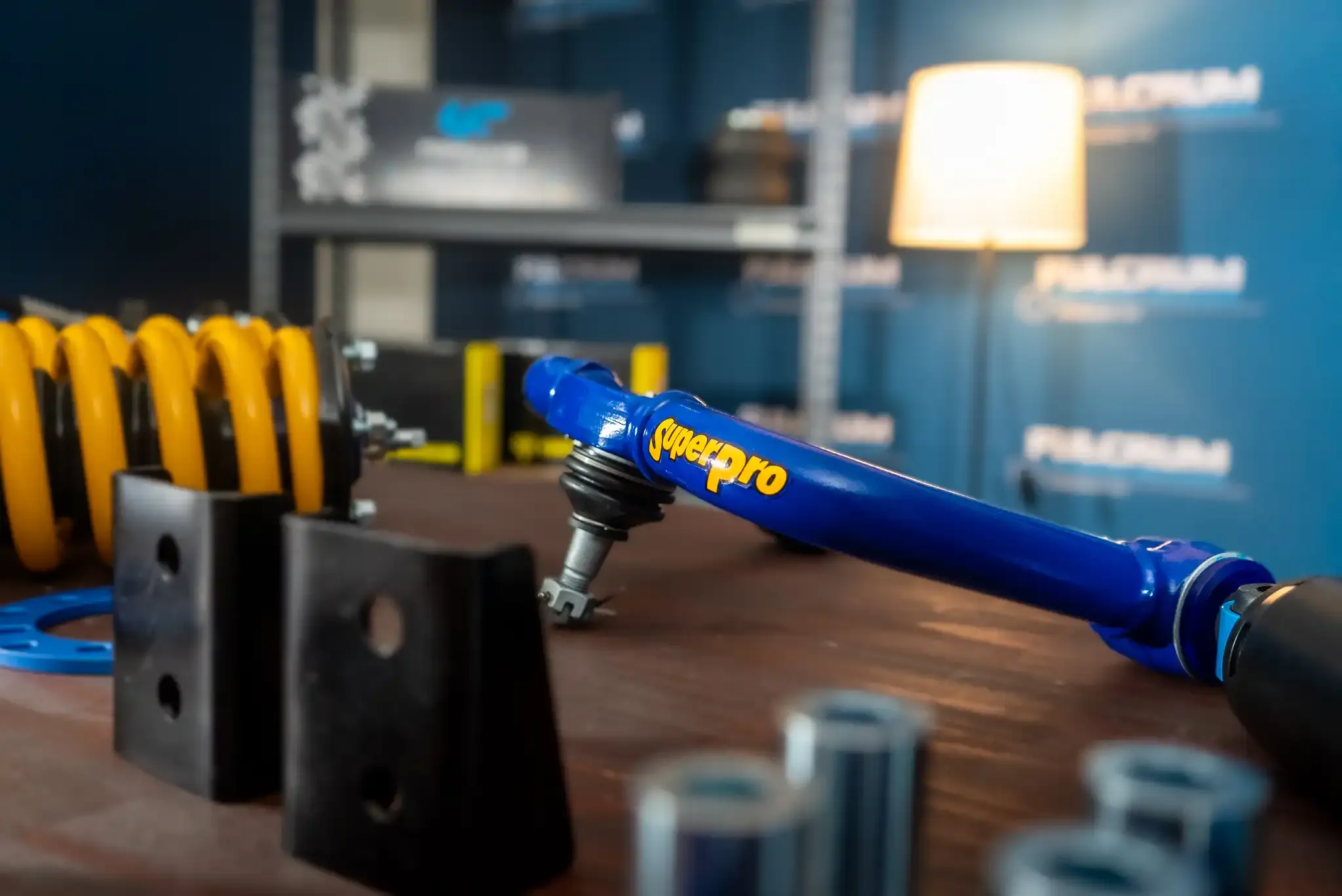

vehicles with radius arm front ends. Lifting reduces caster, which can make steering feel light, wander at highway speed and return to centre poorly. Upper control arms with built in correction, or caster correction bushes on live axle 4x4s, restore it.
Caster correction is one of those terms that comes up straight after a lift, usually when an alignment shop says the numbers won't come back into spec. It sounds technical, but the idea is simple and the fix is well proven. Below we explain what caster is, why lifting changes it and which correction suits your vehicle. To plan a lift that's set up properly from the start, browse our 4x4 lift kits.
What Is Caster and Why Does It Matter?
Caster is the backward tilt of the steering axis when you look at the front wheel from the side. Picture a line drawn through the upper and lower ball joints, or the swivel hubs on a live axle. When the top of that line sits behind the bottom, the vehicle has positive caster.
Positive caster is what makes the steering wheel return to centre after a turn and keeps a vehicle tracking straight at speed. It's the same reason a shopping trolley's front wheels trail behind their pivots and follow the direction of travel.
Enough caster gives you stable, confident steering, which matters even more on a heavy, lifted 4x4.
Why Does Lifting a 4x4 Change Caster?
On independent front suspension utes and wagons, the upper and lower control arms swing in arcs. Lifting the vehicle changes the angle of those arms, which tilts the steering axis and typically reduces caster. Camber moves too, which can make the front tyres wear on their edges.
On live axle 4x4s with radius arms, such as LandCruiser 70 Series and older Patrols, the axle is located by long arms that pivot at the chassis. Lifting the chassis rotates those arms, which rolls the axle housing forward and reduces caster.
On small lifts the alignment can usually bring the figures back within the manufacturer's range. As lifts get bigger, the adjustment runs out and correction parts are needed.
What Are the Signs You Need Caster Correction?
Low caster shows up in the way the vehicle steers, especially at highway speed. Common signs include:
• Light or vague steering: The wheel feels disconnected around centre.
• Wandering on the highway: Constant small corrections are needed to hold a lane.
• Poor return to centre: The wheel doesn't straighten up naturally after a turn.
• Tramlining: The vehicle follows grooves and ruts in the road surface.
• Uneven tyre wear: Usually from camber that couldn't be corrected at the same time.
If your alignment report shows caster or camber outside specification after a lift, correction is the answer.
How Is Caster Corrected After a Lift?
The fix depends on the front suspension design.
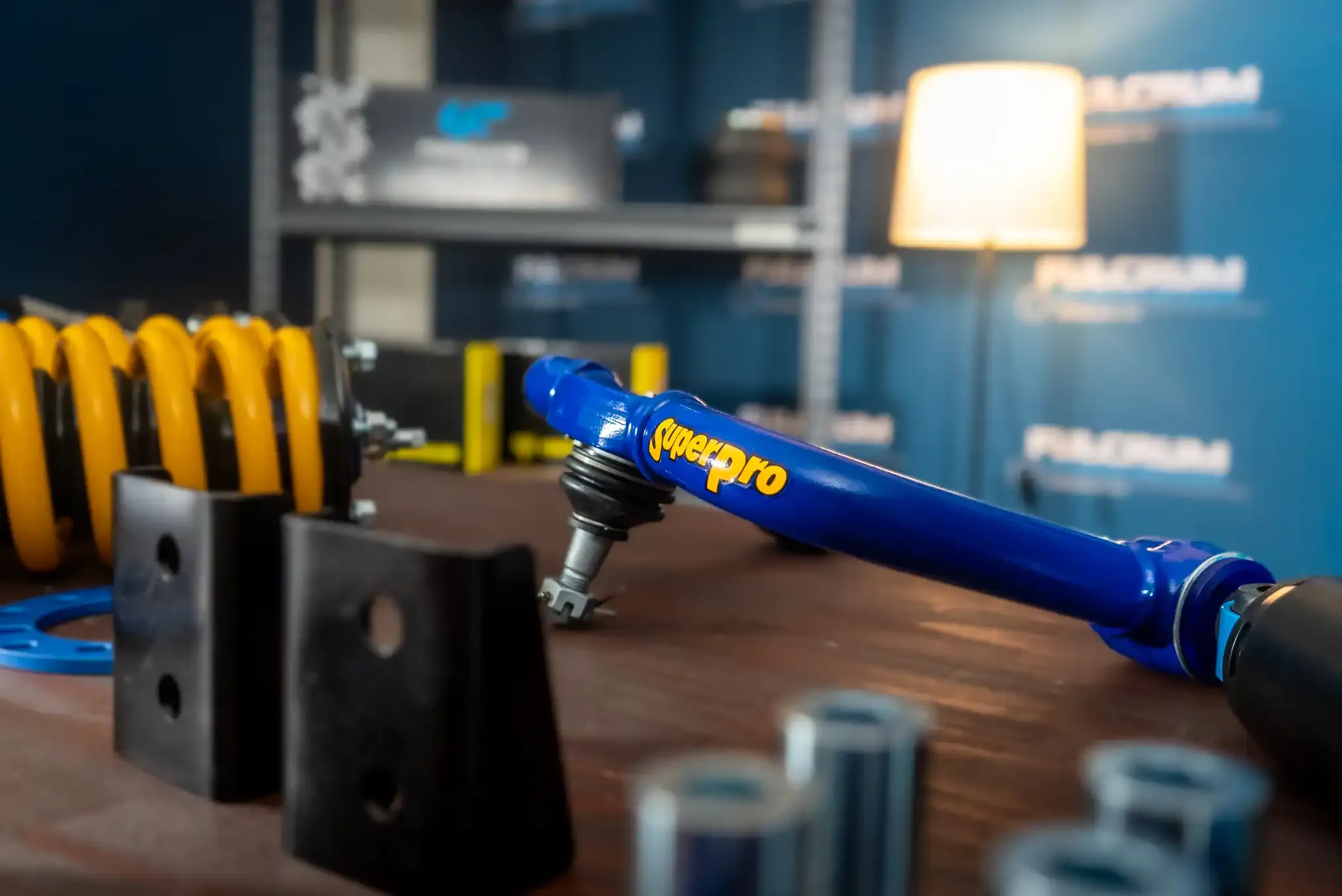
Independent front suspension: Aftermarket upper control arms with the ball joint repositioned add caster back and often improve camber at the same time. Many designs also improve clearance for larger tyres. Some of our lift kits include upper control arms where the lift height calls for them, and others offer them as an option.
Radius arm live axles: Caster correction bushes are fitted where the radius arms meet the axle or chassis. Their offset centres rotate the axle housing back toward the factory angle.
Leaf sprung live axles: Tapered caster wedges between the spring and axle restore the angle.
In every case, a 4x4 wheel alignment follows, setting caster, camber and toe to suit the new height.
Does a 2 Inch Lift Need Caster Correction?
Not always, as many vehicles can be aligned back within specification at 50mm, and our kits are engineered to keep geometry in a sensible range at their stated height. Some platforms, particularly radius arm 4x4s and certain utes, benefit from correction even at 2 inches.
Your fitting dealer will measure caster and camber during the alignment and advise if correction is needed. If you're considering a larger lift, plan for correction from the start. Our guide to how much a 4x4 lift kit costs to install covers what to budget for.
Caster Correction Options Compared
|
Front suspension |
Common on |
Caster fix |
|
Independent front suspension |
Most modern utes and wagons |
Upper control arms with corrected ball joint position |
|
Coil sprung live axle with radius arms |
LandCruiser 70 Series, older Patrols, 80 and 105 Series |
Caster correction bushes |
|
Leaf sprung live axle |
Older 4x4s and utes |
Caster wedges |
FAQs
Looking for more information about caster correction after a lift? Below we answer the most commonly asked questions
What does caster correction do?
Do I need a wheel alignment after a lift kit?
Are caster correction bushes worth it?
Do upper control arms fix caster?
Can low caster be dangerous?
Does adjusting front ride height change caster?
Want a lift that steers as well as it looks? Choose a complete, engineered kit from our 4x4 lift kits range.