


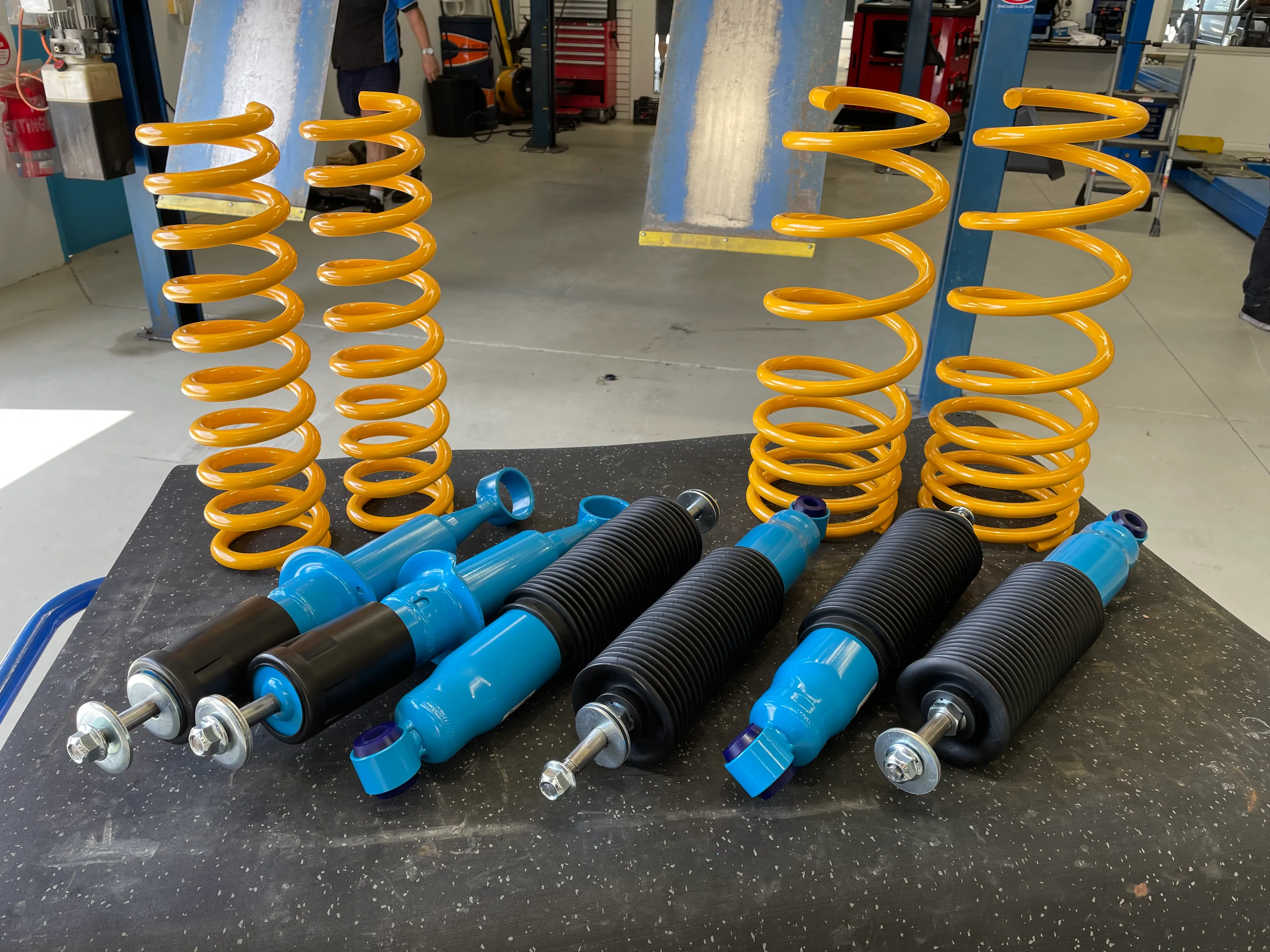

A suspension lift raises the whole vehicle, including the chassis, axles and diffs, by replacing springs and shocks, which adds real ground clearance and travel. A body lift only raises the body off the chassis with spacer blocks, making room for bigger tyres without lifting anything underneath. For off road capability, a suspension lift is the better choice.
Body lift vs suspension lift is a debate that's been running in 4x4 circles for decades, and the confusion is understandable. Both make a vehicle sit higher, but they do completely different jobs once you leave the bitumen. Below we break down how each works, what you actually gain and why we build our range around suspension. To see what's available for your vehicle, browse our 4x4 lift kits.
What Is a Body Lift Kit?
A body lift kit uses spacer blocks fitted between the chassis and the body mounts. The body sits higher on the chassis, which opens up space in the wheel arches for larger tyres. The suspension, springs, shocks, axles and chassis all stay exactly where they were.
Body lifts are mostly found on older body on frame 4x4s, and the blocks are typically 25mm to 50mm tall. Because the body is now further from the chassis, items such as the steering shaft, radiator shroud, bumpers, gear linkages and fuel filler may need extending or relocating.
The main gain is tyre clearance, with very little else changing below the body.
What Is a Suspension Lift?
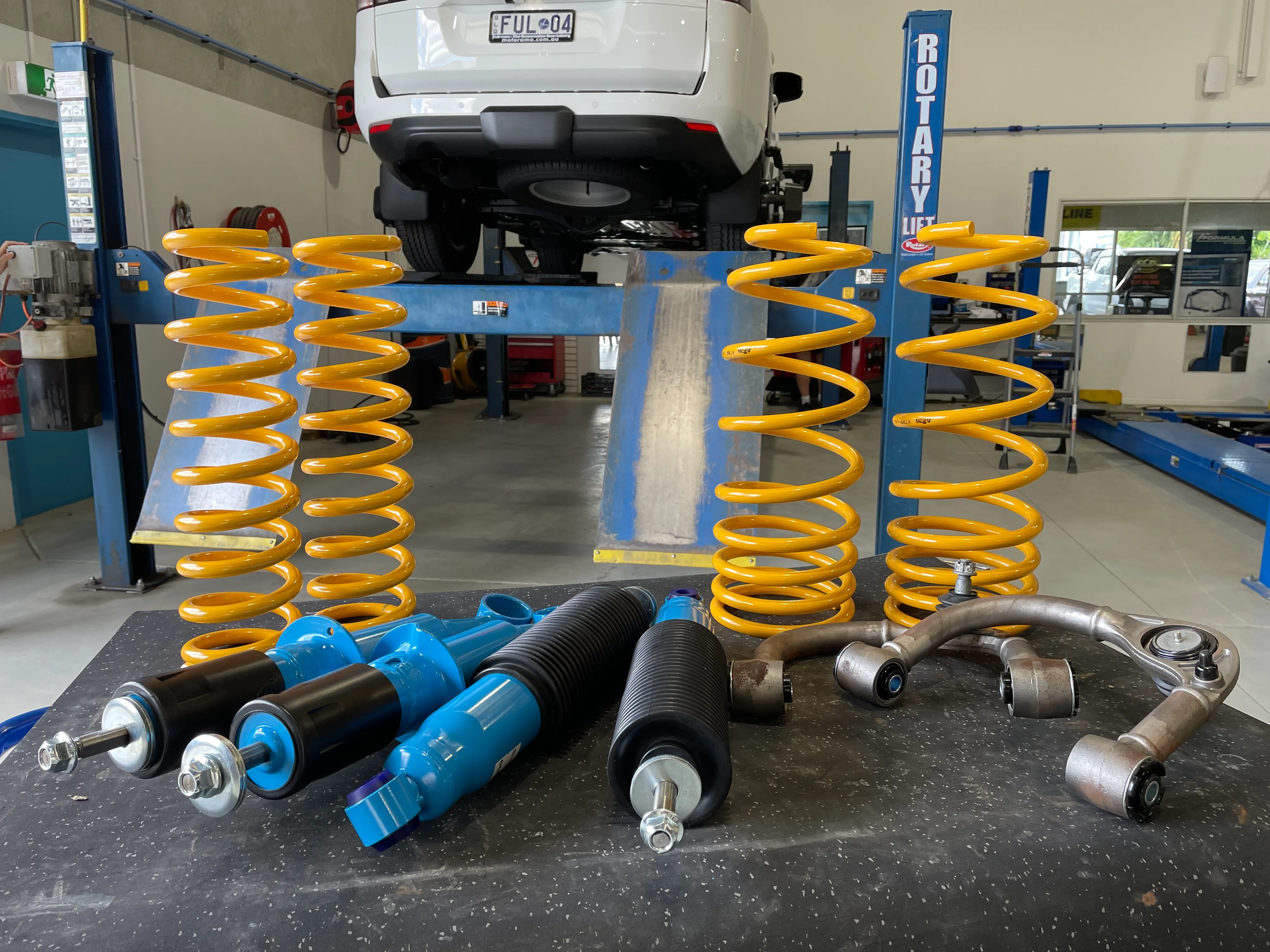
A suspension lift replaces or upgrades the components that hold the vehicle up: springs, shocks or struts, and sometimes control arms or shackles. By raising the ride height at the wheels, it lifts the chassis, sills, fuel tank, transfer case and everything else attached to the frame further from the ground.
A quality suspension lift also improves how the vehicle handles load and rough terrain. Matched springs carry accessory weight properly, and quality shocks control the extra travel, keeping tyres in contact with the ground for better traction.
That's why every Formula 4x4 lift is a complete suspension system, engineered as a matched set for the vehicle it suits and backed by our 5 year / unlimited km warranty.
Body Lift vs Suspension Lift: What Do You Actually Gain?
The biggest difference is ground clearance where it counts. Spacer blocks do nothing for the clearance under your chassis rails, sills or fuel tank, because the chassis doesn't move. Any clearance gain comes from the bigger tyres it allows.
Lifting the suspension raises the chassis directly, improving approach, departure and breakover angles. Pair it with slightly larger tyres and you also gain clearance at the diffs, which is the lowest point on most 4x4s.
Our kits replace tired factory springs and shocks with components built for Australian conditions, so ride quality and control usually improve as well, while spacer blocks leave the original suspension doing exactly the same job it did before.
For touring, towing and tracks, the extra clearance, load support and damping from a suspension lift deliver far more capability than spacer blocks.
Is a Body Lift Legal in Australia?
Body lifts are treated as a modification in their own right under Australian rules, and they generally need certification. They also count toward your vehicle's total lift, so combining a body lift with suspension and tyre changes can quickly take you past the limits that apply without an engineer.
By comparison, a 50mm suspension lift falls within the basic allowance in most states. We explain the limits state by state in is a 3 inch lift legal in QLD.
When Does a Suspension Lift Make More Sense?
For almost every modern 4x4 and ute, a suspension lift is the right choice. Choose suspension if you want to:
• Clear rocks, ruts and washouts: Raising the chassis keeps vital components away from obstacles.
• Carry accessories and touring gear: Uprated springs support bull bars, canopies and drawers without sagging.
• Improve ride and control: New shocks manage corrugations and rough tracks better than tired factory parts.
• Fit slightly larger tyres: A lift creates arch clearance while keeping the vehicle within legal limits.
Many modern vehicles also have crumple zones, airbag sensors and body mounts that make body blocks impractical, which is another reason suspension lifts dominate today.
Body Lift vs Suspension Lift Compared
|
Feature |
Body lift |
Suspension lift |
|
How it works |
Spacer blocks between body and chassis |
Taller springs, longer shocks and struts |
|
Chassis and sill clearance |
No change |
Increased |
|
Diff clearance |
Only from bigger tyres |
From bigger tyres, with arch room created by the lift |
|
Load carrying |
Unchanged |
Improved with uprated springs |
|
Ride and damping |
Unchanged |
Improved with matched shocks |
|
Other parts to modify |
Often steering shaft, bumpers, linkages |
Alignment, plus correction parts on larger lifts |
|
Certification |
Generally required |
Not required up to the basic limit in most states |
FAQs
Looking for more information about body lifts and suspension lifts? Below we answer the most commonly asked questions
Is a body lift or suspension lift better for off road driving?
Can I combine a body lift and a suspension lift?
Does a suspension lift raise the diffs?
Is a body lift cheaper than a suspension lift?
What is a suspension lift kit?
Do I need a wheel alignment after a body lift or suspension lift?
For clearance that counts where it matters, find a complete suspension system for your vehicle in our 4x4 lift kits range.