


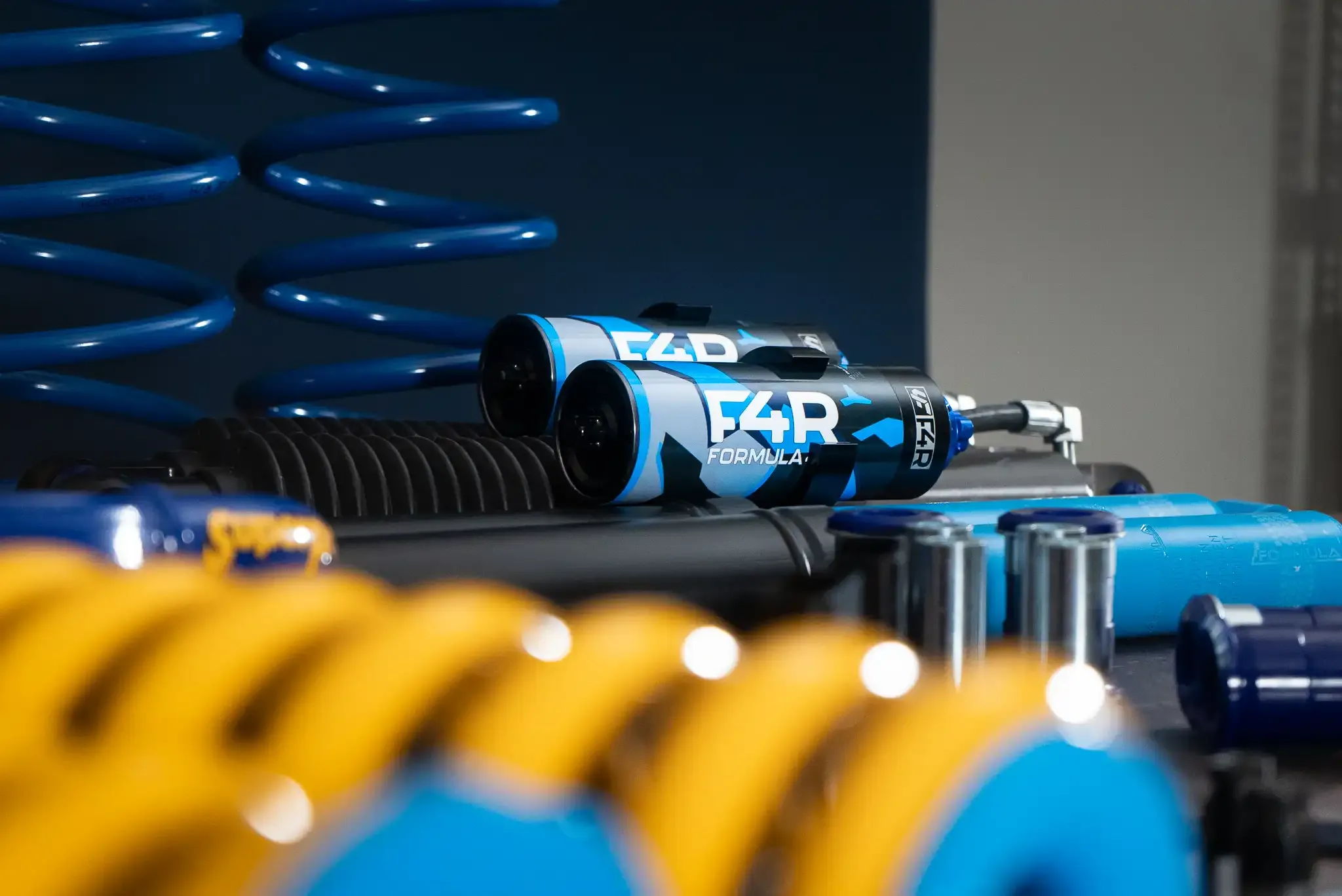

A lift kit doesn't change your vehicle's legal towing capacity, but it does change how your 4x4 tows. A quality lift with uprated springs and matched shocks reduces rear sag, keeps the vehicle level under tow ball mass and controls sway. One that ignores load can make towing worse, so spring rate matters as much as height.
If you tow a caravan, camper or boat, choosing a lift kit with towing in mind makes a big difference to how settled the whole combination feels. What you're really after is a vehicle that sits level, steers accurately and stays stable when the trailer pushes and pulls on the towbar. Below we explain how a lift affects towing and what to look for. For kits built to carry and tow, explore our 4x4 lift kits.
How Does a Lift Kit Affect Towing Performance?
When you hitch up a trailer, the tow ball mass presses down on the rear of the vehicle. Factory springs on many utes and wagons are tuned for comfort when empty, so the rear squats, the nose rises and the front tyres lose some of their load. That reduces steering feel and braking performance, and can make the combination feel loose at highway speed.
A lift kit with springs rated for real loads keeps the vehicle closer to level under tow. Matched shocks then control how the rear moves over bumps and dips, reducing the pitching and bouncing that unsettle a trailer.
The result is a combination that tracks straighter, brakes more evenly and is far less tiring on long trips.
Can a Lift Kit Make Towing Worse?
It can, if the kit is chosen for height alone. Soft springs will still sag under tow ball mass, and the extra height raises the centre of gravity, so the vehicle can feel more prone to sway. Springs that are far too firm for your load cause the opposite problem, with a harsh, skittish rear end when the trailer is unhitched.
Larger tyres fitted alongside a lift also make effective gearing taller, which can increase gear hunting and fuel use when towing heavy.
That's why we match spring rates to the way a vehicle is actually used. Tell your fitting dealer what you tow and carry so the kit suits your real load rather than an empty vehicle.
Does a Lift Kit Change Towing Capacity or Tow Ball Mass?
No, braked towing capacity, tow ball mass limits and Gross Combination Mass are set by the vehicle manufacturer, and a lift kit doesn't change any of them. Only certified upgrades, such as GVM and GCM upgrades on approved models, can alter legal weight ratings.
Tow ball mass also counts toward your vehicle's GVM. If your 4x4 is loaded with accessories and touring gear, adding a caravan can push it over the limit even when the trailer is within towing capacity. We explain how these figures interact in GVM vs GCM: what's the difference.
If you regularly tow near your limits, a certified GVM upgrade is worth considering alongside, or instead of, a standard lift.
Does Lifting Change Towbar Height?
Yes, lifting the rear raises the tow ball, so the trailer can sit nose high if nothing is adjusted. A nose high trailer shifts weight rearward and can reduce stability.
The fix is simple: use an adjustable or drop tongue so the trailer sits level when hitched. Your fitting dealer can measure the height before and after the lift so you know how much drop you need.
Getting the trailer level is one of the easiest ways to improve towing stability after a lift.
What to Look for in a Lift Kit for Towing
Choose a kit that's built as a matched system with springs and shocks designed to work together. Key things to look for:
• Springs rated for your load: Including tow ball mass, passengers and accessories.
• Quality shocks: Larger bore or remote reservoir shocks resist fade on long, hot tows.
• Modest lift height: Around 50mm keeps the centre of gravity sensible and stays within basic legal lift limits.
• Professional setup: Including a 4x4 wheel alignment and a check of headlight aim.
For long distance towing on gravel, our best shocks for towing a caravan guide explains why heat management matters.
Lift Kit Choices for Towing
|
Towing use |
Recommended approach |
Why |
|
Occasional light trailer |
Fixed height lift kit |
Level stance and better control at a lower cost |
|
Regular caravan or camper towing |
Lift kit with uprated springs and quality shocks |
Reduces sag and pitching under tow ball mass |
|
Long outback tows on corrugations |
Adjustable remote reservoir lift kit |
Consistent damping when shocks run hot |
|
Towing near GVM or GCM limits |
Certified GVM upgrade |
Legally increases carrying capacity |
FAQs
Looking for more information about towing with a lift kit? Below we answer the most commonly asked questions
Does a lift kit reduce towing capacity?
Will a lift kit stop my ute sagging when towing?
Do I need airbags if I have a lift kit?
Does lifting a 4x4 make it less stable when towing?
Do I need a new tongue after a lift?
Should I get a GVM upgrade instead of a lift kit for towing?
If towing is on the agenda, find a kit built for real loads in our 4x4 lift kits range.